Metal Finishes and Care

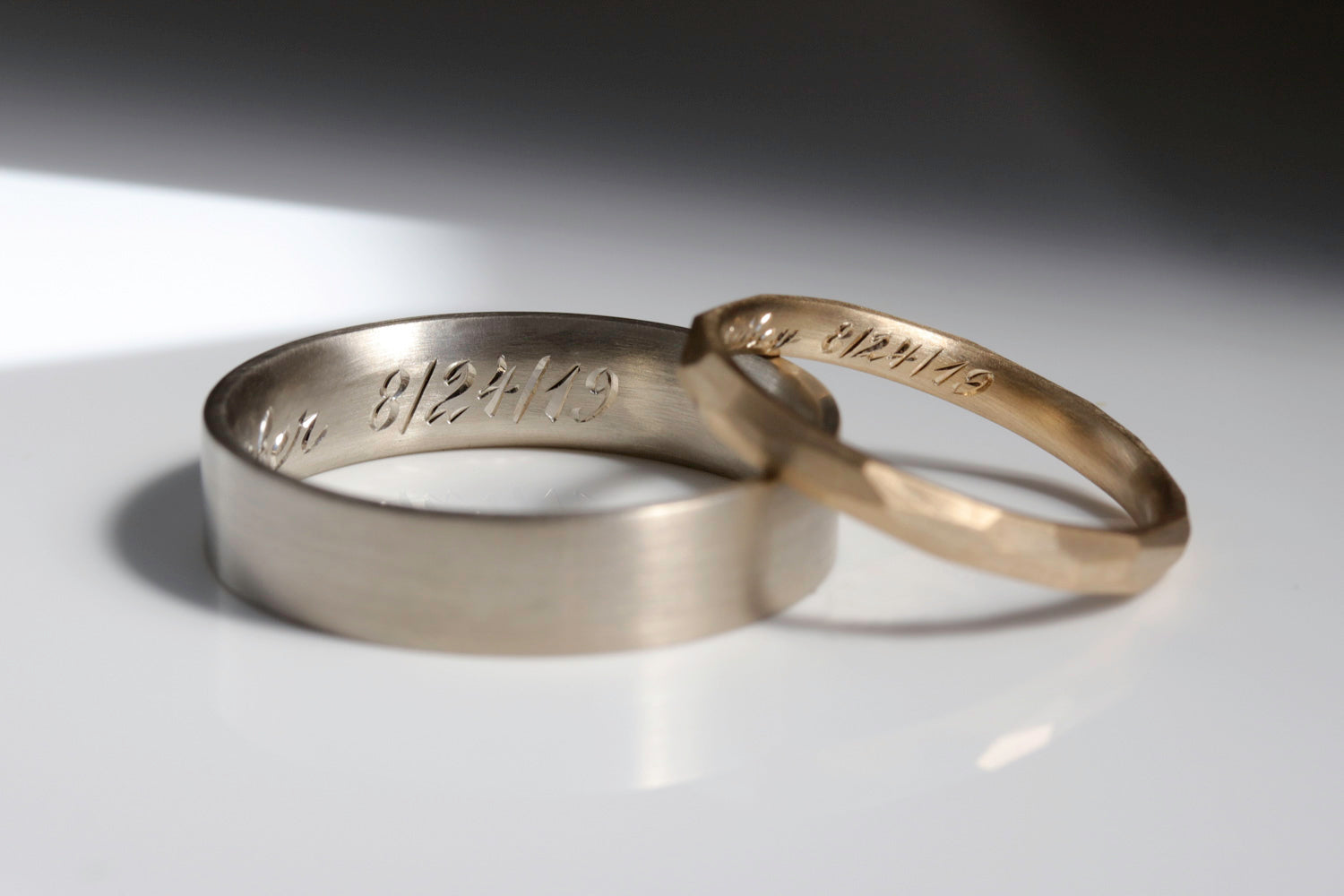
Metal finishes are surface treatments that change how your ring looks. Satin, matte, and brushed are different names for similar non-shiny finishes. Polished means shiny. Since finishes are shallow and rings are high-wear items, finishes change quickly on rings but much slower on earrings or necklaces.
Here's what to expect: a matte finish will become shinier with wear, and a polished finish will become more matte. Over time, they meet in the middle. Start with what you like better, knowing it will change.
Scuff Marks vs. Scratches
Over time, a wedding band will acquire scuff marks. Rings are high-wear items (much like shoes) and show scuff marks pretty quickly.
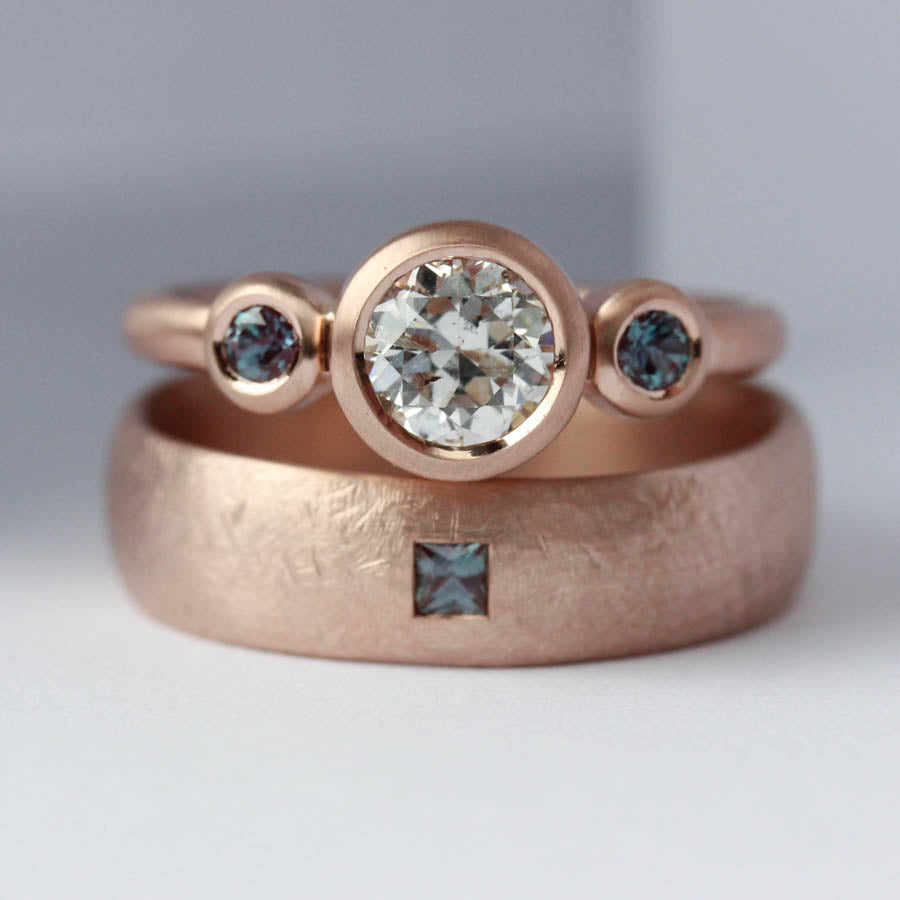
Scuff marks are superficial; you can see them but not feel them. They're caused by burnishing from hard materials like leather, wood, and plastic (purses, briefcases, dishes, steering wheels). Scuff marks on a matte band will appear shiny, while those on a shiny band will appear dull. Some people feel scuff marks look less apparent on polished finishes than on matte finishes.
Scuff marks can be removed by refinishing, but I want to give a word of caution: many commercial jewelry stores encourage customers to refinish their rings every year. They do this because they can reclaim a bit of metal to sell, it gets you back in the store to potentially buy something else, and it helps wear down your ring faster, so it needs more work or replacement. This practice exists to extract more money from customers, not because it's good for your ring.
Every time a ring is refinished, a little metal is removed, making it thinner over time. We recommend embracing the marks from the passage of time. Scuff marks don't affect the integrity of your ring. If you leave them, the finish takes on its own patina, which is the usual look of a well-worn wedding band. Many people take pride in this as it shows the life lived as a couple.
Scratches, dings, and gouges are deeper and can be felt with your eyes closed. No metal is impervious to scratches, and wedding bands take a lot of wear and tear. Any metal can scratch, but how quickly depends on the metal, your care, and your lifestyle. Silver (which is soft) will change immediately, whereas gold, platinum, and palladium rings hold up much better. Industrial metals like stainless steel and titanium resist scratching longer. Textured bands hide scratches much better than smooth wide bands (which are like white tennis shoes of the ring world).
How Different Metals Wear
Palladium and platinum scratch and ding faster than gold, but unlike gold, no metal is removed when scratched. Instead, the metal displaces. Over many years, a platinum or palladium band retains about the same weight it had when it was first made. In contrast, a gold band becomes thinner over time because the metal is slowly rubbed away.
With silver, palladium, platinum, and gold bands, remember these are fine jewelry. If you don't want your ring to bend, scratch, or gouge, treat it with some care. Any metal or stone harder than your ring can scratch or gouge it. Remove your ring before heavy work (like moving furniture or rock climbing), and always store it safely where you won't lose it. See this blog post about when to take your ring off.
Chemical Considerations
Chlorine, especially at high temperatures, can erode fine jewelry. Don't wear gold jewelry while using chlorine bleach or while in a pool or hot tub. And sulfur can darken metal, especially silver, so don't wear your jewelry in a hot spring.
About Plating
Typically, commercial white gold rings are rhodium-plated or "dipped." Plating is just a thin coating of another metal on the surface, and like finishes, it wears away over time. If your ring has rhodium plating, it needs re-plating about once a year to maintain the look. We don't plate our jewelry; however, some components we don't make (such as chain) may be rhodium-plated.
Cleaning and Inspection
You can do most ring maintenance yourself at home. Regular cleaning and prong inspection help you catch issues early without unnecessary refinishing. Learn how to clean your ring and how to inspect your prongs.