Natural Diamonds vs. Lab-Grown Diamonds vs. Moissanite: Choosing the Right Stone for Your Ring
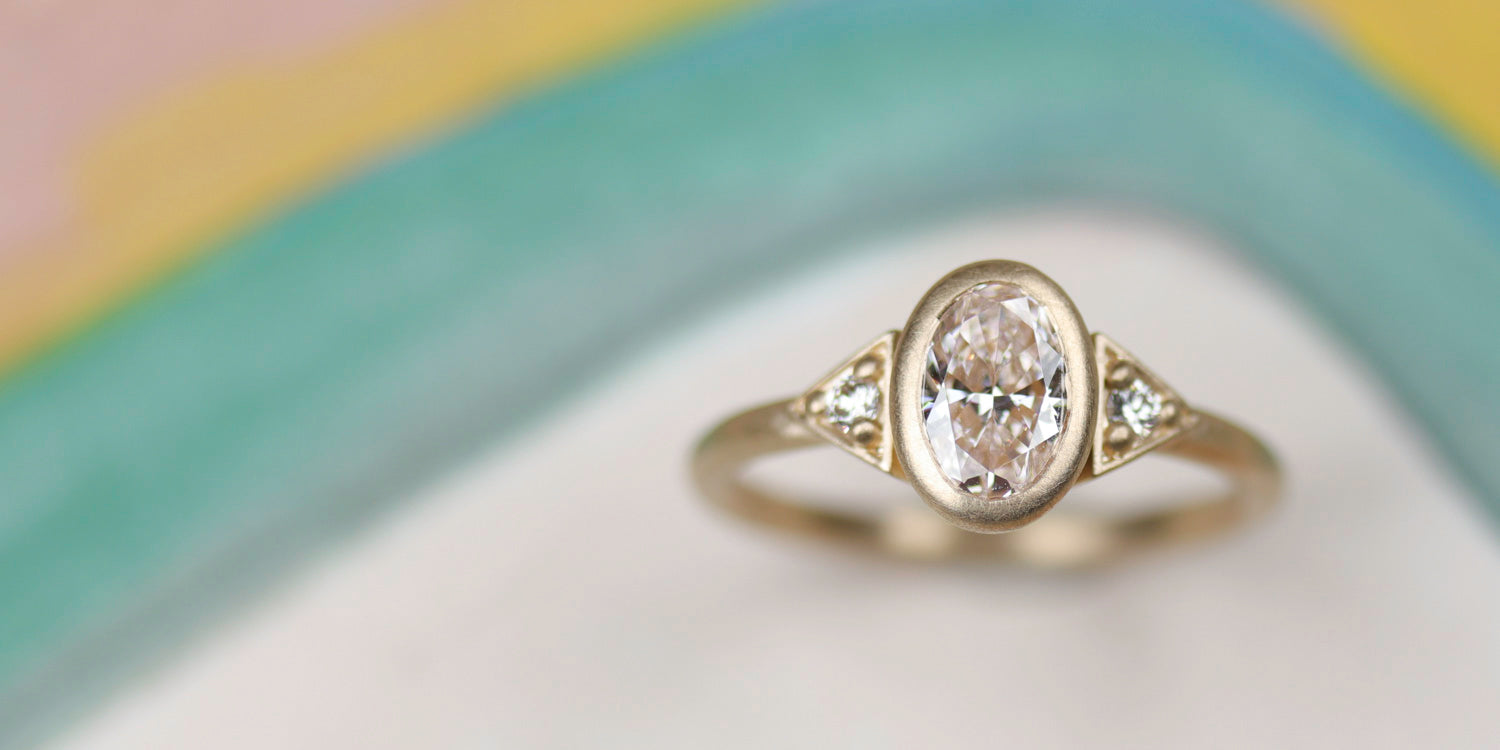
White sparkly stones? Yes please! But choosing between natural diamonds, lab-grown diamonds, and moissanite can feel overwhelming, especially if this is your first piece of fine jewelry. This guide breaks down the fundamental differences to help you find what makes sense for you, your budget, and your lifestyle.
It’s easy to get swept up in marketing or what others say should be important in an engagement ring. However, I believe the most important factor is that when you look at your ring, it brings you joy and reminds you of your special person. Here’s what you need to know to choose the stone that feels right for you.
First, a note about how we source stones
At Aide-mémoire, we prioritize responsibly sourced materials, which include recycled, lab-grown, Canadian, and Australian diamonds. When possible, we use recycled diamonds because they have the smallest social and environmental footprint. Occasionally, we source new diamonds (like salt & pepper, champagne, or antique-style cuts) when recycled options aren't available in those styles.
We avoid terms like "conflict-free" as blanket claims, since those phrases can oversimplify a very complex global industry. Instead, we focus on traceability, transparency, and making thoughtful choices about our materials.
Natural Diamonds
Natural diamonds formed deep within the earth billions of years ago. They're made of pure carbon and are the hardest known natural material (a 10 on the Mohs scale), which means they're incredibly durable for daily wear.

What makes them special:
- Vibrant uniform sparkle
- Each stone has unique characteristics
- Can achieve the highest colorless grades
- Last many lifetimes and can be reset for future generations
- Unique options like antique cuts, salt & pepper diamonds, champagne diamonds, and raw diamonds
Things to consider:
- Significantly higher cost than lab-grown diamonds
- Limited availability in sizes and cuts when sourcing responsibly
When natural diamonds make sense: We often recommend natural diamonds for those drawn to antique cuts, salt & pepper, champagne, or raw diamonds - stones with character, color, or an organic quality that's unique to their natural formation.
If you're resetting a family diamond, that's an especially meaningful and sustainable choice. Diamonds last for many lifetimes and can be passed down and reset again and again. We love working with heirloom stones! It's one of the most responsible and sentimental ways to create a ring.
How we source natural diamonds: We work exclusively with recycled diamonds (our preference for their low social and environmental impact), or newly mined Canadian or Australian diamonds. We typically only source newly mined stones when they aren't available in recycled options.
Recycled diamonds don't require new mining or energy output for creation. While we don't know the original conditions under which they were first mined, using recycled stones means not contributing to new mining practices.
For white round brilliants and other standard cuts, lab-grown diamonds offer identical properties at a much lower price point.
Lab-Grown Diamond
Lab-grown diamonds are chemically, physically, and optically identical to natural diamonds. Made of carbon with the same crystal structure, they score 10 on the Mohs Hardness Scale. The only difference is origin: grown in a controlled lab environment rather than formed deep within the earth.

What makes them special:
- Identical sparkle, brilliance, and fire to natural diamonds
- Same cubic crystal structure and optical performance as natural diamonds
- Just as durable as natural diamonds for active lifestyles
- The earth wasn’t mined to acquire them
- Allows you to get a larger or higher quality stone for your budget
Things to consider:
- Resale value is low (though honestly, natural diamond resale value is also limited. Diamond prices are artificially inflated by the suppliers, so we never recommend diamonds as an investment)
When lab-grown diamonds make sense: If you want a white round brilliant or standard cut diamond, lab-grown gives you identical properties to natural diamonds at 80-85% less cost. You can opt for a larger stone within your budget, or put that money toward a house, travel, or whatever matters most to you.
Grading note: Grading systems vary. Some lab-grown diamonds come with general quality ranges (like “F+ VS+”), while others include full certifications. GIA now uses a “Quality Assessment” system with categories such as “Premium” or “Standard,” whereas IGI and other labs still use traditional 4Cs grading.
Moissanite
Moissanite is made of silicon carbide and scores 9.25 on the Mohs Hardness Scale - second only to diamonds. All moissanite available today is lab-grown since natural moissanite is extremely rare. Visually, moissanite is similar to diamonds in brilliance, though it tends to have more colorful flashes of light, known as “fire.” Some people love this rainbow sparkle; others find it a little too flashy.

What makes it special:
- Lots of sparkle and brilliance
- More fire (rainbow flashes) than diamonds
- Very high clarity - no visible inclusions
- Durable enough for everyday wear
Things to consider:
- More fire can create a “disco ball” effect that not everyone prefers, especially in larger stones
- Areas can sometimes appear dark or black at certain angles due to the way light bends through its hexagonal crystal structure
- All moissanites look pretty much the same; they don't have the unique characteristics that diamonds can have
- For small melee stones, they are often more expensive than lab-grown diamonds
- Oval-cut moissanites are much taller than oval diamonds meaning the setting has to be taller to accommodate them.
- We think of moissanite as a wonderful option for your ring, rather than a piece to pass down for generations
When moissanite makes sense: If budget is your primary concern and you're looking at center stones 0.50ct and above, moissanite offers significant savings while still giving you plenty of sparkle. If you love maximum sparkle and the rainbow fire doesn't bother you, moissanite is a solid choice.
When you might want diamonds instead: If you're comparing based on the actual properties of the stones rather than just price, diamonds are much harder, have clearer sparkle without the dark facets, and have more controlled fire. For small accent stones, lab-grown diamonds are often cheaper than moissanite anyway.
If you hope to pass your ring down someday, diamonds are the better choice. They last for many lifetimes and can be reset into new designs.
Making Your Choice

Choose a natural diamond if:
- You want an antique cut, salt & pepper, champagne, or raw diamond
- You're resetting an heirloom diamond
- You want maximum hardness and durability
- You want something that can be reset for future generations
Choose lab-grown diamonds if:
- You want a white standard cut diamond
- A natural diamond is out of your budget
- You'd rather get a larger or better quality stone for your budget
- You want maximum hardness and durability
- You need melee/accent stones (often cheaper than moissanite)
- You want something that can be reset for future generations
Choose moissanite if:
- Budget is your primary concern for center stones 0.50ct and above
- You love lots of sparkle and fire
- You want durability for everyday wear, but you're not planning to pass this ring down or reset it
Still Have Questions?
Choosing wedding jewelry can feel like a big decision, especially if you're new to wearing rings. We're here to help you find what works for your lifestyle, budget, and what makes you happy.
While this post focuses on white stones, we also love colored sapphires and other gemstones. See pieces we've created with colored gemstones on our custom items page. And if you have an heirloom diamond you'd like to give new life to, check out our heirloom diamond resetting service.